Powered by Blogger.
RSS

Pages

Rutherford Model of Atom - Learn Postulates & Drawbacks

Rutherford Model of Atom

The idea of atom originated in ancient Greek and Indian cultures. The term atom was first coined by Democritus around 370 BC and defined it as the entity which is eternal, uncreated, and infinite in number. He stated that all objects in this universe is made of atoms, and their characteristics determine the qualities of the object itself.

After the genesis of this idea, many philosophers and scientists gave their own version of Atomic theory. The idea was even lost for a few centuries and was rediscovered by John Dalton at the end of the 18th century. Dalton even postulated some laws so as to justify the reasons behind chemical reactions.
With time rolling, new discoveries were made in this field. J.J Thomson was one such pioneer who not only discovered electron but also gave the first model of the atom which came to be known as the Plum Pudding Model. This model was based on then considered hypothesis that atoms are neutral in charge. So, when Thomson discovered electrons, he proposed that electrons are like plums that are embedded in a pudding of positive charge.
Later in the early 20th century (1908-1913), Hans Geiger and Ernest Marsden conducted the famous Gold Foil Experiment under the guidance of Ernest Rutherford. Rutherford was the student of J.J Thomson, and through his gold foil experiment proved that the plum pudding model is incorrect.

Gold Foil Experiment

When Rutherford discovered Protons, there was a need to update the existing model of atom as well. He conducted an experiment to determine the positions of subatomic particles in the atom. He along with Hans Geiger and Ernest Marsden conducted the Gold foil experiment.
In this experiment, rutherford bombarded high energy alpha particles on a very gold foil. He surrounded the gold foil with zinc sulfide screens to observe the deflections produced.
Rutherford Model of Atom - Testbook
The observations made from this experiment are described below:
  1. A large portion of the alpha beam passed through gold foil without getting deflected. This suggests that a major portion of the atom is empty.
  2. Just a fraction of alpha particles were deflected during this experiment suggesting that positive charge is not evenly distributed in the atom as assumed in the Plum Pudding model. But rather, it is concentrated over a very small area.
  3. The third observation made was that only very few alpha particle rays were deflected back at 180°. That means the volume of positive charge occupied in the atom is very small in comparison to the total volume of the atom itself.
Rutherford Model of Atom - Testbook

Postulates of Rutherford Model of Atom

  1. Atom is composed of negatively and positively charged particles called electrons and protons. The majority of the mass is concentrated at the center of the atom known as the nucleus.
  2. Electrons revolve around the nucleus at a very high speed in a fixed path known as orbits.
  3. Atoms are electrically neutral and the electrostatic attraction holds the electrons and protons together
  4. The volume occupied by the nucleus is very small in comparison to the volume occupied by atom.

Drawbacks of Rutherford Model of the Atom

The atomic model proposed by Rutherford is analogous to the solar system where the nucleus is like Sun and electrons are like planets revolving around it. But, this model failed to align with Clark Maxwell’s electromagnetic principles. According to this principle, a charged body moving under the influence of attractive forces loses energy continuously in the form of electromagnetic radiation. So,  electrons are a charged body and it should emit radiations while revolving around the nucleus. As a result of this, the electrons should lose energy at every turn, moving closer and closer to the nucleus and ultimately collapse. According to Maxwell’s calculations, it should take 10-8 seconds for an electron to collapse in the nucleus.
  1. However, this never happens. Thus, the Rutherford model of atom failed to explain the Stability of atom. 
  2. The Rutherford model of the atom also failed to explain the structure of atoms.
  3. Furthermore, the model also failed to explain the existence of certain definite lines in the hydrogen spectrum. If the electrons were to lose energy continuously, the atomic spectrum of hydrogen should have been continuous. However, the spectrum of hydrogen is found to be discontinuous in the form of characteristics lines of definite wavelengths.

Summarized Notes On Rutherford Model Of Atom

  1. J.J Thomson discovered electrons. He also proposed the plum pudding model.
  2. Ernest Rutherford discovered protons and through his Gold foil experiment proposed a new model of the atom.
  3. The new model of the atom that Ruderford proposed resembles the solar system.
  4. Most of the volume in an atom is empty.
We hope the above furnished article on Rutherford Model of Atom has helped you understand this important concept. 

  • Digg
  • Del.icio.us
  • StumbleUpon
  • Reddit
  • RSS

Vitamins and Their Sources : Know the list of Different Vitamins & Their Importance


We usually talk about vitamins but do we know what are vitamins? The vitamins are important as they perform various functions in the body. The deficiency of vitamins may take place as the food which you intake might not have enough of vitamin contents. This deficiency of vitamins hampers proper body functioning. To have a balanced diet enriched with the vitamins we need to know about the vitamins, their importance and sources. Read this article to know about different Vitamins and their sources and their importance.

Vitamins and Their Sources

There are 13 essential vitamins that are important for a human body. These vitamins are divided into two categories, fat-soluble and water-soluble vitamins. Given below in the table are the Different vitamins and their sources.
Fat-Soluble VitaminsWater-Soluble Vitamins
It is stored in the body’s fatty tissue.It is not stored in the body.
Fat-soluble vitamins are – A,D,E, KWater-soluble vitamins are – B1, B2, B3, B5, B6, B7, B9, B12, Vitamin C

Vitamins and Their Sources: What are Fat-Soluble Vitamins

The fat-soluble vitamins are similar to oil and do not dissolve in water. Fat-soluble vitamins are most abundant in high-fat foods and are much better absorbed into your bloodstream when you eat them with fat. Given below is the table with the list of different vitamins and their sources from which you can get, their importance for the body.
VitaminsImportanceSources
Vitamin A
  • This vitamin is vital for vision.
  • This vitamin provides healthy skin and mucous membranes.
  • It also improves bone and tooth growth.
  • It is vital for improving immunity.
  • Fortified milk
  • Cheese
  • Cream
  • Butter
  • fortified margarine
  • Eggs
  •  Liver
  • Leafy vegetables
  • Apricots
  •  Carrots
  • Sweet potatoes
  • Pumpkin.
Vitamin D
  • It is essential in proper absorption of calcium stored in bones.
  • Egg yolks
  • Liver
  • Fatty fish
  • Fortified milk
  • Fortified margarine
  • Sunlight.
Vitamin E
  • It protects cell walls.
  • Soyabean, corn e.t.c.
  • Leafy green vegetables
  • Wheat germ
  • Whole-grain products
  • Liver
  • Egg yolks
  • Nuts and seeds.
Vitamin K
  • It essential for proper blood clotting.
  • Kale
  • Collard greens
  • Spinach
  • Broccoli
  • Brussels sprouts
  • Asparagus
  • Produced in the intestinal tract by bacterias.

Vitamins and Their Sources: What are Water-Soluble Vitamins

Water-Soluble Vitamins are vitamins that can dissolve in water. These vitamins are carried to the body’s tissues but are not stored in the body. They are found in animal foods and plants or dietary supplements and should be taken daily. Both Vitamin C and members of the vitamin B complex are water-soluble. To know more about Water-Soluble Vitamins and their Sources, refer to the table given below.
VitaminsImportanceSources
Thiamine (vitamin B1)
  • The part of an enzyme which is required for energy metabolism.
  • It is significant in nerve functioning.
  • Pork
  • Whole-grain
  • Enriched breads
  • Cereals
  • Legumes
  • Nuts and seeds.
  • It is found in all nutritious food in moderate amounts.
Riboflavin(vitamin B2)
  • The part of an enzyme is needed for energy metabolism.
  • It is important for normal vision & skin health.
  • Milk and milk products
  • Leafy green vegetables
  • Whole-grain
  • Enriched  breads
  • Cereals.
Niacin (vitamin B3)This vitamin helps in maintaining:
  • healthy skin
  • nerves
  • digestive system.
  • Meat
  • Fish
  • Whole-grain
  • Enriched breads
  • Cereals
  • Mushrooms
  • Leafy green vegetables
  • Peanut butter.
Pantothenic acid
  • This vitamin is essential for the metabolism of food.
  • It is widespread in almost all food.
Biotin
  • Important in metabolism of proteins and carbohydrates.
  • It also helps in the production of hormones and cholesterol.
  • It is widespread in food.
  • It is produced in the intestinal tract by bacteria.
Pyridoxine (vitamin B6)
  • The part of an enzyme needed for protein metabolism.
  • It helps in making red blood cells.
  • Meat
  • Fish
  • Poultry
  • Vegetables
  • Fruits.
Folic acid
  • The part of an enzyme is needed for making DNA.
  • This also required for new cells i.e. red blood cells.
  • Leafy green vegetables
  • Legumes
  • Orange juice
  • Liver
  • It is now added to most refined grains.
Cobalamin (vitamin B12)
  • The part of an enzyme needed for making new cells.
  • It is important for nerve functioning.
  • Meat
  • Poultry
  • Fish
  • Seafood
  • Eggs
  • Milk and milk products
  • It is not found in plant foods.
Ascorbic acid (vitamin C)
  • This promotes healthy teeth & gums.
  • It is needed for healthy immune system.
  • The part of an enzyme is needed for protein metabolism.
  • It helps in iron absorption.
  • Citrus fruits
  • Cabbage family
  • Cantaloupe
  • Strawberries
  • Peppers
  • Tomatoes
  • Potatoes
  • Lettuce
  • Papayas
  • Mangoes
  • Kiwifruit.
Hope this article on vitamins and their sources was informative and helpful in your exam preparation. If you have any queries related to the article, do mention in the comments section.

  • Digg
  • Del.icio.us
  • StumbleUpon
  • Reddit
  • RSS

The Human Nervous System


The nervous system is a complex connection of nerves and unique cells (neurons) that are responsible for transmitting signals to and from various body parts.

Classification Of the Human Nervous System

The nervous system is basically classified into Central nervous system and Peripheral nervous system. The central nervous system manages the whole body and the nervous system. It is only because of the nervous system’s efficient coordination between the different organ systems that we can feel sensations like pain or cold.
Broadly, the nervous system can be classified into:
  1. The central nervous system (CNS) consisting of the brain, spinal cord.
  2. The peripheral nervous system (PNS) consisting of sensory neurons, ganglia (a cluster of neurons) and nerves.
The Human Nervous System - Testbook
The nervous system is also classified on the basis of functionalityinto:
  1. The somatic nervous system(SNS) responsible for conscious perception and voluntary motor response. For example, getting startled when someone sneaks up on you. That was not decided by you, nonetheless, it is a motor response involving skeletal muscle contractions.
  2. The autonomic nervous system( ANS) responsible for involuntary body movements usually with the objective of maintaining body homeostasis. For example, sweating when your body is hot is to cool the body down.
  3. The enteric nervous system(ENS) responsible for controlling smooth muscle and glandular tissue in the digestive system.
Let’s understand in detail the Central Nervous system and the Peripheral Nervous System –

Central Nervous System

So far you know that the nervous system is classified into Central and Peripheral nervous system. Neurons are the basic unit of the nervous system. These neurons are classified into three types – Sensory, motor and association/connecting neurons. The main function of the central nervous system is to keep control over the entire body and the nervous system. The Central Nervous consists of two main parts – Brain and Spinal Cord. These two parts are covered by three membranes mentioned below:
  • Durameter which is the outer layer/membrane.
  • Arachnoid membrane is the middle layer.
  • Piameter is the innermost membrane
Let’s study in details the two main parts of the central nervous system i.e. brain and spinal cord –
Human Nervous System - Testbook

Brain

It is entirely covered by a protective layer called meninges. To protect the brain from injuries it is covered by a bony box termed as the cranium. Furthermore, the brain is divided into three parts Forebrain, Midbrain, and Hindbrain.
  • Forebrain
The forebrain is made up of the Cerebrum, Thalamus, and Hypothalamus. The Cerebrum is associated with memory, wisdom, knowledge, will power and thinking. Thalamus regulates cold, heat and pain. Whereas, the Hypothalamus controls the sweat, blood pressure, secretion of hormones, thirst, hunger, etc.
  • Midbrain
Midbrain manages the main function of hearing and vision.
  • Hindbrain
Hindbrain includes parts like Cerebellum, Pons and Medulla. The human body posture is managed by Cerebellum. The Pons acts as a bridge between the spinal cord and brain. Medulla regulates important functions like respiration, heart rate, sneezing, and coughing, etc.

Spinal Cord

  • The spinal cord starts from the medulla oblongata and extends towards the neural canal of the backbone/vertebral column.
  • There are 31 pair of spinal nerves that arises from the side of the spinal cord.
  • The function of the Spinal cord is to control all the reflexes that take place below the neck.
  • Furthermore, the spinal cord conducts the sensory impulses arising from the muscles and skin to the brain.
  • Vertebrae protect the spinal cord from any kind of injuries.
  • The spinal cord also conducts the motor responses from the brain to the muscles present in the limbs and trunk area.

Peripheral Nervous

The peripheral nervous system consists of the nerves that arise from the brain and spinal cord. The human body has 31 pairs of spinal nerves and 12 pairs of cranial nerves. The peripheral nervous system is divided into the somatic nervous system and autonomic nervous system.

Somatic Nervous system

Somatic Nervous system includes the peripheral nerve fibers that convey the sensory information to the motor nerve fiber and central nervous system.

Autonomic Nervous system

The autonomic nervous system consists of three sections namely, the sympathetic, parasympathetic and the enteric nervous system. It regulates the smooth muscle of the viscera (internal organs) and glands.

What is the Function of the Nervous System?

  • Essentially, the primary function of the nervous system is to send signals either from one cell to another or from one body organ to another.
  • There is more than one way in which cells send signals. The broadcast method of signaling is done through the endocrine system where the hormones are released into the circulatory system. Through the nervous system, the signaling is done “point to point”. Hence, the nervous system entails advantages of being more specific, accurate and speedy.
  • The human nervous system controls the human body. The body reacts to stimulus because the nervous system extracts these external signals via sensory receptors and the central nervous system processes these signals and decides on an appropriate response and then sends an output signal to the concerned body part to activate the response.
Human nervous system - Testbook

Diseases Associated with the Nervous System

Diseases occurring in the nervous system are mainly due to a genetic defect, a result of traumatic experiences, infections, or ageing. Diseases associated with the peripheral nervous system are mainly due to stoppage in nerve conduction. Illustrated below is the list of diseases along with their symptoms, treatment and precautionary measures.
Name of
disease
SymptomsTreatmentPrevention
Alzheimer’sAssociated with failing memory and deterioration in reasoning ability.Treatments exist only to slow down the symptoms because the death of brain cells cannot be reversed.Regular physical exercise can reduce the risk of Alzheimer’s by at least 50%. We should keep a check on our thyroid and sex hormone levels and eat healthy fats.
Leprosy– Infectious disease and is associated with skin lesions and no sensation to touch
– numbness in hands, feet and legs
– Muscle weakness, as evident from symptoms such as foot drop.
 Early recognition is important as early treatment limits the damage. Medications exist to kill the microorganisms and reduce symptoms.Doctors recommend annual examinations for at least five years after the last contact with an infectious person.
PolioFever, headache, vomiting, diarrhoea, fatigue, neck stiffness, muscle stiffness, abnormal sensations in an area, muscle spasmsThe motive of the treatment is to control the growth of symptoms while the infection runs its course.Polio can be completely prevented and immunised against through vaccination. The polio vaccine needs to be given at age 2 months, 4 months, and between 6 and 18 months of age with a booster between 4 and 6 years of age.
RabiesPreliminary symptoms are mild and varied. The victim alternates between moods of agitation and calm; experiences muscle spasms of mouth and pharynx.Injections or immunoglobulin vaccine.Rabies can be prevented by vaccinating dogs and cats as required by law. We should not keep wild animals as pets and stay away from strays.
EpilepsyEpilepsy is a sudden rush of electrical activity in the brain. Mild seizures may be difficult to recognise and could span a few moments wherein you lack awareness. Stronger seizures will lead to spasms and uncontrollable muscle twitches. Victims either become confused or lose consciousness.The treatment plan depends on the severity of seizures. Some options are anti-epileptic medications, ketogenic diet, vagus nerve stimulator and even brain surgery of the affected area.We should keep away from alcohol and drugs and maintain a regular sleep schedule. Vitamin D tablets can be consumed and regular exercising would also be beneficial. A head injury can be prevented by wearing helmets while riding at all times. Regularise your sleep cycle and ensure you stick to it.
Parkinson’s diseaseParkinson’s disease commences usually with a tremor in the hand. Other symptoms include slow movement, stiffness, loss of balance, speech impairment.Treatments prevent symptoms from aggravating. In more advanced cases, surgery is advised. A speech pathologist will correct the problems associated with speech.Consume organic products which do not contain pesticides and insecticides. Have green tea and also incorporate Vitamin D3 and Omega 3 Fatty Acids in our diet. Regular aerobic exercise can also be beneficial.
Cerebral PalsySymptoms of cerebral palsy start to show in the first three years of life. These include overdeveloped or underdeveloped muscles, leading to stiff or floppy movements; crawling abnormally, limited movement, preferring one side of the body to another, lying down awkwardly.The treatment varies from individual to individual. A care plan addresses the needs of the child and the parents. As the child gets older, the plan is reviewed and revised. The aim is to provide maximum possible independence to the child.Unfortunately, cerebral palsy cannot be completely prevented during pregnancy or delivery. However, expecting mothers should try to deliver a healthy baby through regular visits to their gynecologist. Identifying potential Rh incompatibility between mother and child can also help prevent cerebral palsy in the unborn child.
This note on one of the most vital systems of the human body will help you in your static GK preparation. However, it is important for the candidate to be prepared with the other human body processes as all work hand-in-hand. 

  • Digg
  • Del.icio.us
  • StumbleUpon
  • Reddit
  • RSS

KINEMATICS


Kinematics

Kinematics is branch of mechanics which deals with the study of motion of the objects without taking into account the cause of their motion.


Rest and Motion

An object is said to be at rest if it does not change its position which respect to its surroundings with time and said to be in motion if it changes its position with respect to its surrounding with time.

·         Rectilinear motion moving car on horizontal road, motion under gravity etc.

·         Angular motion such as particle going on a circle, projectile motion, rotation of machine shaft etc.

·         Rotational motion such as motion of a fan.

·         It an object travels equal distances in equal intervals of time, then it is said to be in uniform motion.

·         It an object travels unequal distances in equal intervals of time, then it is said to be in non-uniform motion.


Speed

·         The distance covered by a moving body in a unit time interval is called its speed.

·         Speed =  

·         When a body travels equal distances with speed  and , then average speed is the harmonic mean of the two speeds.

·         

·         When a body travels for equal times with speeds  and , then average speed is the arithmetic mean of the two speeds.

·         


Velocity

·         The time rate of change of displacement of a body is called its velocity.

·         

·         An object is said to be moving with uniform velocity if it undergoes equal displacements in equal intervals of time.

·         An object is said to be moving with non-uniform or variable velocity if it undergoes unequal displacement in equal intervals of time.

·         Average velocity = 


Acceleration

·         The time rate of change of velocity of a body is called its acceleration.

·         Acceleration = 

·         It is a vector quantity and its SI unit is .

·         Acceleration at an instant of time is known as instantaneous acceleration.

·         When the velocity of a body increases with time, then its acceleration is positive and if velocity decreases with time, then its acceleration is negative called deceleration or retardation.

·         If acceleration does not change with time, it is said to be constant acceleration.


Equations of Uniformly Accelerated Motion (Along straight line)

If a body started its motion with initial velocity u and attains final velocity v in the interval t. The acceleration assumed to be uniform in motion is a and the distance travelled is s, then equations of motion:

·      

·         

·      

·         If any body is falling freely under gravity, then a is replaced by g in above equations.

·         If an object is thrown vertically upward, then in above equations of motion a is replaced by (–g).

·         For a body with zero acceleration or constant speed, graph between velocity and time will be a line parallel to time axis.

·         Velocity–Time Graph For accelerating or decelerating body the graph will be a straight line inclined to time axis and velocity axis.

·         Graph between position (distance)-time for an accelerating or decelerating body is always a parabola.

·         Acceleration-time graph for uniformly accelerating body is a line parallel to time axis.

·         In case of uniform accelerated, the graph between position and velocity is always parabola.

·         In case of uniformly accelerated motion, the graph between velocity and time is always a straight line.

·         Slope of displacement-time graph gives velocity and slope of velocity-time graph gives acceleration.


Projectile Motion

·         When a body is thrown from horizontal making an angle (θ) except 90°, then its motion under gravity is a curved parabolic path, called trajectory and its motion is called projectile motion.

Examples:

·         The motion of a bullet shot from the gun

·         The motion of a rocket after burn-out

·         The motion of a bomb dropped from a aeroplane etc.


Properties of Projectile Motion

If we drop a ball from a height and at the same time thrown another ball in a horizontal direction, then both the balls would strike the earth simultaneously at different places.


Circular Motion

·         The motion of an object along a circular path is called circular motion.

·         Circular motion with a constant speed is called uniform circular motion.

·         The direction of motion at any point in circular motion is given by the tangent to the circle at that point.

·         In uniform circular motion, the velocity and acceleration both changes.

·         In case of non-uniform circular motion, the speed changes from point to point on the circular track.


Centripetal Acceleration

During circular motion an acceleration acts on the body towards the centre, called centripetal acceleration.

The direction of centripetal acceleration is always towards the centre of the circular path.


Force

It is an external push or pull with can change or tries to change the state of rest or of uniform motion. SI unit is newton (N) and CGS unit is dyne. 1 N =  dyne.

If sum of all the forces acting on a body is zero, then body is said to be in equilibrium.


Centripetal Force

During circular motion a force always acts on the body towards the centre of the circular path, called centripetal force.


Centrifugal Force

In circular motion we experience that a force is acting on us in opposite to the direction of centripetal force called centrifugal force. This is an apparent force or imaginary force and also called a pseudo force.


Applications of centripetal and centrifugal forces

·         Cyclist inclined itself from vertical to obtain required centripetal force. To take a safe turn cyclist slower down his speed and moves on a path of larger radius.

·         Roads are banked at turns to provide required centripetal force for taking a turn.

·         For taking turn on a curved road, the frictional force is acting between the tyres of the vehicle and the road acts as centripetal force.

·         If a bucket containing water is revolved fast in a vertical plane, the water may not fall even when bucket is completely inverted because a centrifugal force equal or greater than the weight of water pushes the water to the bottom of the bucket.

·         For orbital motion of electrons around the nucleus electrostatic force of attraction is acting between the electrons and the nucleus as centripetal force.

·         Cream is separated from milk when it is rotated in a vessel about the same axis. During rotation lighter particles of cream experience a lesser force than the heavier particles of milk.

·         For revolution of the earth around the sun, gravitational force of attraction between the earth and the sun acts as centripetal force.


Newton’s Laws

Newton’s First Law

A body continues in its state of rest or of uniform motion in a straight line unless an external force acts on it. It is based on


law of inertia.

Inertia is the property of a body by virtue of which is opposes any change in its state of rest or of uniform motion in a straight line.


Inertia of Rest

·         When a bus or train at rest starts, to move suddenly, the passangers sitting in it jerk in backward direction due to their inertia of rest.

·         The dust particles come out from a carpet when it is beaten with a stick due to their inertia of rest.

·         A passenger jumping out from a rapidly moving bus or train is advised to jump in forward direction and run forward for a short mile due to inertia of rest.

Inertia of Motion

When a running bus or train stops suddenly, the passengers sitting in it jerk in forward direction due to inertia of motion


Momentum

The momentum of a moving body is equal to the product of its mass and its velocity.


Conservation of Linear Momentum

The linear momentum of a system of particles remains conserved if the external force acting on the system is zero.

·         Rocket propulsion and engine of jet aeroplane works on principle of conservation of linear momentum. In rocket, ejecting gas exerts a forward force which helps in accelerating the rocket upward.


Newton’s Second Law

The rate of change of momentum of a body is directly proportional to the force applied on it and change in momentum takes place in the direction of applied force.


Newton’s Third Law

For every action, there is an equal and opposite reaction and both act on two interacting objects.

Rocket is propelled by the principle of Newton’s third law of motion.


Impulse

·         A large force which acts on a body for a very short interval of time and produces a large change in its momentum is called an impulsive force.

·         Its unit is newton-second.

·         A fielder lowers its hand when catching a cricket ball because by lowering his hands, he increases the time of contact for stopping the ball and therefore fielder has to apply lesser force to stop the ball. The ball will also exert lesser force on the hands of the fielder and the fielder will not get hurt.

·         Wagons of a train are provided with the buffers to increase the time of impact during jerks and therefore, decreases the damage. The vehicles like scooter, car, bus, truck etc. are provided with shockers.


Friction

Friction is a force which opposes the relative motion of the two bodies when one body actually moves or tries to move over the surface of another body.

The cause of friction is the strong atomic or molecular forces of attraction acting on the two surfaces at the point of actual contact.


Uses of Friction

·         A ball bearing is a type of rolling-element that uses balls to maintain the separation between the bearing races. The purpose of a ball bearing is to reduce rotational friction and to support loads (weight).

·         Friction is necessary for walking, to apply brakes in vehicles, for holding nuts and bolts in a machinery etc.

·         Friction can be decreases by polishing the surfaces by using lubricants or by using ball bearings.

·         Tyres are made of synthetic rubber because its coefficient or friction with road is larger and therefore, large force of friction acts on it, which stops sliding at turns.

·         The tyres are threading which also increases the friction between the tyres and the road.

·         When pedal is applied to a bicycle, the force of friction on rear wheel is in forward direction and on front wheel is in the backward direction.

Loses due to Friction

·         Too much Loss of Energy in machines and then ultimately the machines are damaged.


Machine–Lever

It is a simple machine in which a straight or inclined rod is made to turn or rotate at a point freely or independently. There are three points related to lever namely load, effort and fulcrum.

·         Load The weight carried by the lever is called load.

·         Effort To operate lever, the force applied externally is called effort.

·         Fulcrum The fixed point about which the rod of lever moves independently is called fulcrum.


  • Digg
  • Del.icio.us
  • StumbleUpon
  • Reddit
  • RSS

Quant Algebra Formulas and Tricks

Quant Algebra Formulas/Identities

Algebra may seem difficult to most of you, but we will help you make it your trump card! Quickly go through the Basic algebra formulas to brace yourselves for the questions that follow.

BASIC ALGEBRA IDENTITIES 

(a + b)2 = a2 + b2 + 2ab
(a – b)2 = a2 + b2 – 2ab
a2 – b2 = (a + b) (a – b)
(a + b)3 = a3 + b3 + 3ab (a + b)
(a – b)3 = a3 – b3 – 3ab (a – b)
a3 + b3 = (a + b) (a2 + b2 – ab)
a3 – b3 = (a – b) (a2 + b2 + ab)
(a + b + c)2 = a2 + b2 + c2 + 2 (ab + bc + ca)
(a + b + c)3 = a3 + b3 + c3 + 3(a + b) (b + c) (c + a)
a3 + b3 + c3 – 3abc = (a + b + c) (a2 + b2 + c2 – ab – bc – ca)
= ½ (a + b + c) [(a – b)2 + (b – c)2 + (c – a)2]

Now that you have revised the important algebra identities, try your hands at the following questions before we give you the cheat sheet. We have picked these questions from the previous year papers.

Directions: What should come in place of ‘?’ in the following questions?


abc

a + b + c

ab + bc + ca

3

 Commonly Used Detailed Method


⇒ bc + a (b + c) =?
∴ Answer = bc + ab + ac
Option – 3


Lengthy isn’t it?  Want to know how you can solve this question in a few seconds? Read further to know the short trick.

Quant Algebra Short Trick – Know How to Solve in Seconds?

Time plays a very important part in any exam and using the above conventional method would easily eat up your 5-10 mins. Learn how you can solve this difficult algebra question in just a few seconds.


The above equation is a perfect example of homogeneous expressions because all the expressions have the same degree.


Degree of overall expression = 2

Now if you check the degrees of the options:

abc: Degree = 3

a + b + c: Degree = 1

ab + bc + ca: Degree = 2

3: Degree = 0

∴ option 3 i.e. ab + bc + ca is the right answer.

Note

1) While calculating the degree of expression, keep in mind that we add the values of exponents if the variables are multiplied, we subtract the values if the values are divided and if the variables are added or subtracted then the highest degree is taken.

2) A degree is the highest power of the expression.

How to find the degree of an expression?

ExpressionCorresponding DegreeExplanationa33Value of exponentb or c1Value of exponent(b + c), (a– b) or (a-c)1Highest Degreea3 (b + c)3 + 1 = 4Values are added because they are multiplied(a – b) (a-c)1 + 1 = 2Values are added because they are multiplied.4 – 2 = 2Values are subtracted because they are dividedabc1 + 1 + 1 = 3Values are added because they are multiplied.a + b + c1Highest Degreeab + bc + ca1 + 1 = 2Values are added firstly because they are multiplied,
and the highest value is taken.30Variable is having 0 exponents.


Quant Algebra Questions


Its time you should try out a few questions, to strengthen the concept you’ve just read. Solve the following quant Algebra questions


Q.1 


1) a + b + c


2) 3


3) a2 + b2 + c2


4) abc


 Check Answer & Solution Here


The above equation is a perfect example of homogeneous expressions because all the expressions have the same degree.


Degree of overall expression = 1


Checking options:


Degree = 1

Degree = 0

Degree = 2

Degree = 3


∴ option 1 i.e. a + b + c is the right answer.


Q.2 (bc + ca + ab)3 – b3c3 – c3a3 – a3b3 = ?


1) 3abc (a + b) (b + c) (c + a)


2) (a + b) (b + c) (c + a)


3) (a – b) (b – c)(c – a)


4) 24abc


 Check Answer & Solution Here


The above equation is a perfect example of homogeneous expressions because all the expressions have the same degree.


Degree of (bc + ca + ab)3 = 2 × 3 = 6


Degree of b3c3 = 3 + 3 = 6


Degree of c3a3 = 3 + 3 = 6


Degree of a3b3 = 3 + 3 = 6


Degree of overall expression = 6


Checking options:


Degree = 6

Degree = 3

Degree = 3

Degree = 3


∴ option 1 i.e. 3abc (a + b) (b + c) (c + a) is the right answer.


Q3. 


1) 1


2) x/y


3) (xyzw)m


4) (xyzw)m/2


 Check Answer & Solution Here


Checking options:


Degree = 0

Degree = 0

Degree = 4m

Degree = 2m


∴ option 4 i.e. (xyzw)m/2 is the right answer.


Q4. (x + y + z)3 – (x + y – z)3 – (y + z – x)3 – (z + x – y)3 = ?


1) 8(x + y + z)


2) 24xyz


3) 12


4) 24


 Check Answer & Solution Here


The above equation is a perfect example of homogeneous expressions because all the expressions have the same degree.


Degree of (x + y + z)3= 3


Degree of (x + y – z)3 = 3


Degree of (y + z – x)3 = 3


Degree of (z + x – y)3= 3


Degree of overall expression = 3


Checking options:


Degree = 1

Degree = 3

Degree = 0

Degree = 0

∴ option 2 i.e. 24xyz is the right answer.

  • Digg
  • Del.icio.us
  • StumbleUpon
  • Reddit
  • RSS

Figures of Speech


There are two ways of using a language – Figuratively and literally. When we talk in terms of figurative language, the meaning of any phrase/meaning will depend on the situation in which they are used. The literal language uses the exact definition and real meanings of phrases and words. A figure of speech relies on such rhetoric and figurative language.


To give a more stylized and specialized meaning the words diverge from their literal meanings when we use figures of speech. Let us, for instance, consider the phrase “fast like lightning”. This phrase clearly implies great speed, but, it does not literally mean as fast as lightning. Example: “Seeing the Dogs following, he ran as fast as lightning”.  Let us learn more about figures of speech.


Types of Figures of Speech


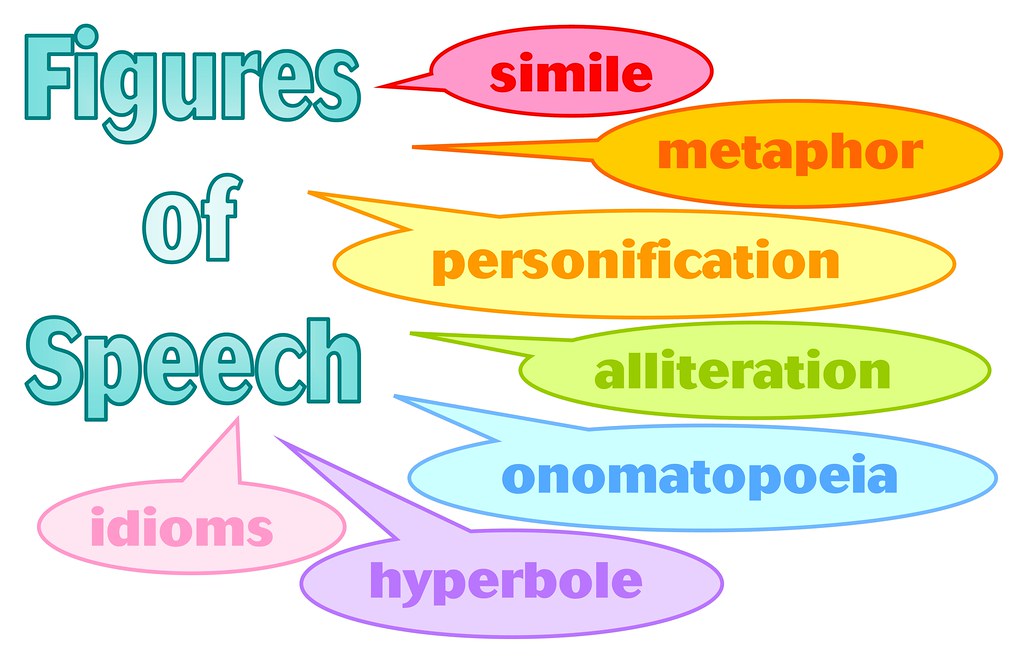
There are many figures of speech, but here in this article, we will be discussing five main figures of speech we use in our daily prose.


1. Figures of Speech: Simile


A simile is a figure of speech that uses comparison. Two specific words “like” and “as” are used in a simile to compare two unlikely things, that have nothing in common. This is generally done to highlight the dramatic behaviour of the prose and put into effect comparisons and vivid image. It is the commonest forms of a figure of speech and is used in everything life.


Let us see some examples of simile. “she is as cute as a kitten”. Here you will notice a girl and her cuteness is being compared to a Kitten. This is an illogical and unusual comparison, but it brings out an imagination quality in the sentence. The literal sentence would have read “She is cute”, but using the simile makes it sound much better. Other such examples can be


As bold as brass


As bright as a button


As shiny as a new pin


2. Figures of Speech: Metaphor


Simile and metaphor are very similar. Metaphor generally compares to things that are not at all similar. This helps in bringing out the symbolism. A metaphor is a phrase or word used that is used to show its similarity to another thing. It helps in explaining an idea, but a metaphor, when taken with its literal meaning, sounds completely absurd.


An example of a metaphor is “Bob is a hungry wolf, he can eat a lot.” Literally, this sounds absurd. But this is a metaphor which suggests that Bob can eat a lot. It compares or implies that Bob is a Wolf to bring out the symbolism.


While a metaphor and simile seem to be very similar, there is one simple difference between the two. In a simile, we use the words “as” and “like” for comparison,  A metaphor will not have either of those two words.


3. Figures of Speech: Personification


Another very interesting figure of speech is Personification.  When we talk about personification, a non-human entity is generally represented as human. We give an intangible idea or an inanimate object of human qualities such as gestures, emotions or even speech. This is generally done to portray the object as alive. This helps the reader or listener paint a vivid picture. On the contrary,  if the words are taken at their literal meaning, they will surely sound absurd.


“My alarm clock yells at me to get out of bed every morning”. Here we have taken an object, clock, and personified it as a living thing by claiming that it yells. Other such examples could be, “My flowers were begging for water”. “The ivy wove its fingers around the fence.”


4. Figures of Speech: Hyperbole


In the Greek language, Hyperbole means ‘excess’. And the main purpose of using it is to symbolise that it exaggerates. Hyperbole is generally used to lay stress on the significance or overstate something. These exaggerated statements should not be taken at their literal meaning. Hyperboles are mostly used to create a distinct and enduring impression.


An example would be “I’ve told you to clean your room a million times!”. Obviously, he must have not asked to clean the room million times, we only exaggerate to emphasize on how many times he might have asked. Some other examples are, “I am so hungry I could eat a horse”. “I have a million things to do today.”


5. Figures of Speech: Onomatopeia 


Onomatopoeia is the use of words (such as hiss or murmur) that imitate the sounds associated with the objects or actions they refer to. It is a figure of speech where words or phrases indicate sounds. Often to better describe a setting and bring about more imagery writers use words to involve all five of our senses.


For example “The best part about music class is that you can bang on the drum”. Here the word ‘bang’ is indicating the sound coming from the drum. Some other examples are “It is not unusual for a dog to bark when visitors arrive”. “Silence your cellphone so that it does not beep  during the movie.”


Hope you liked this article on Figures of Speech. If you have any doubts regarding this article, do mention in the comments section.


  • Digg
  • Del.icio.us
  • StumbleUpon
  • Reddit
  • RSS

COMPUTER TERMS


RJ-45 Port

RJ45, which incidentally stands for registered jack 45, is the Ethernet style data port found on switches, routers and network cards. RJ45 actually refers to the port (female) and the connector (male) though it often is used to refer to a cable type, most commonly referred to as the Ethernet Cable.

USB

A USB port is a standard cable connection interface for personal computers and consumer electronics devices. USB ports are used for connecting devices for data transfer and for charging devices as well. Flash drives are biggest examples for these ports, which are connected on these ports only. Types of USB Ports - USB-A, USB-B and USB-C.

DVI

Digital Visual Interface (DVI) is a video display interface developed by the Digital Display Working Group (DDWG). The interface is designed to transmit uncompressed digital video and can be configured to support multiple modes such as DVI-A (analog only), DVI-D (digital only) or DVI-I (digital and analog). DVI can stream up to 1920×1200 HD video, or with dual-link DVI connectors you can support up to 2560×1600 pixels.

Augmented Reality

Augmented reality is using technology to superimpose information on the world we see. This is rather different from virtual reality. Virtual reality means computer-generated environments for you to interact with, and being immersed in. Augmented reality (also known as AR), adds to the reality you would ordinarily see rather than replacing it. 

Pokemon go game is a good example of AR where the gamers used physical world as gaming spaces with superimposed Pokemon ( the character of the game) in the real world.

IEEE 802

IEEE 802 is a family of The Institute of Electrical and Electronics Engineers Standards Association (IEEE-SA) is an organisation within IEEE that develops global standards in a broad range of industries. IEEE 802 are standards dealing with local area networks and metropolitan area networks.

Some important working groups of IEEE802 protocol family are:

IEEE 802.1         Higher Layer LAN Protocols (Bridging)

IEEE 802.3         Ethernet

IEEE 802.11 Wireless LAN (WLAN) & Mesh (Wi-Fi certification)

IEEE 802.14 Cable modems

IEEE 802.15 Wireless PAN

ARPANET

ARPANET was a large wide-area network created by the United States Defense Advanced Research Project Agency (ARPA). ARPANET was to be used for projects at universities and research laboratories in the US. The Internet protocol suite (TCP/IP) was introduced as the standard networking protocol on the ARPANET.

Data warehousing

A data warehouse is a relational database that is designed for query and analysis rather than for transaction processing. Data warehouse is also known as an enterprise data warehouse is a system used for reporting and data analysis, and is the central repository of integrated data from one or more disparate sources.  Data warehousing involves data cleaning, data integration, and data consolidations.

Data Mining

Data Mining (sometimes called data or knowledge discovery) is the process of analysing data from different perspectives and summarising it into useful information. The related terms data dredging, data fishing, and data snooping refer to the use of data mining methods to sample parts of a larger population data set.

Data warehousing is the process of compiling and organising data into one common database, and data mining is the process of extracting meaningful data from that database.

Dataphone Modem

At&T Dataphone was the first commercial modem made for converting digital computer data at analog signals for transmission across long distance networks. A modem (modulator-demodulator) is a network hardware device.

Hybrid Cloud

A hybrid cloud joins together a public and private cloud with an encrypted connection and technology that makes data portable. The key here is that both clouds remain separate, independent entities while also having one or more touch points in common.

A public cloud is one based on the standard cloud computing model, in which a service provider makes resources, such as applications and storage, available to the general public over the Internet. Examples of public clouds include Amazon Elastic Compute Cloud (EC2), IBM's Blue Cloud, Sun Cloud, Google AppEngine and Windows Azure Services Platform. Whereas a private cloud is a particular model of cloud computing that involves a distinct and secure cloud-based environment in which only the specified client can operate.

Foreign Key

In a relational database, a foreign key is a field in one table that uniquely identifies a row of another table or the same table i.e. the foreign key is defined in a second table, but it refers to the primary key in the first table.

POST

POST (Power-On Self-Test) is the diagnostic testing sequence that a computer's basic input/output system (or "starting program") runs to determine if the computer keyboard, random access memory, disk drives, and other hardware are working correctly.If the necessary hardware is detected and found to be operating properly, the computer begins to boot.

BSOD

      Blue screens are generally caused by problems with your computer’s hardware or issues with its hardware driver software. A BSOD is the result of low-level software crashing — or faulty hardware.A blue screen occurs when Windows encounters a STOP Error. This critical failure causes Windows to crash and stop working. The only thing Windows can do is stop the computer and restart it.

Doughnut Chart in Excel

If you have several parts of something one, you can demonstrate each item in one pie chart. But a doughnut chart can help you demonstrate the changes of those parts. A pie chart contains one data series.  A doughnut chart shows the relationship of parts to a whole, but a doughnut chart can contain more than one data series.

  • Digg
  • Del.icio.us
  • StumbleUpon
  • Reddit
  • RSS

Featured post

Ideal Gas Equation - Learn Ideal Gas Equation & Limitations

Ideal Gas Equation PV =nRT  is considered as  Ideal Gas Equation  which describes the behaviour of a gas. This is also known as the  Ge...

Popular Posts